Skip to content

Platform Overview

Three steps. Days, not weeks.

Bring what you already have

Application inventory, discovery exports, questionnaires, meeting transcripts — in whatever shape your team collected them. No new tooling, no re-running discovery, no clean-room data requirements.

00:12 00:45

Mapinator does the analysis

Every workload scored across the 7Rs. Pricing modeled. Target architecture recommended. The work that took your architects three weeks, done while you're on another engagement.

AWS Target Architecture On-Prem Workloads EC2 Rehost ECS Replatform Lambda Refactor Retire Decommission RDS 7Rs

You get the business case

Not a data dump. The executive summary, the financial model, the cost of inaction, the architecture — assembled and ready to present.

Each step leverages MAP-native data formats and AWS service integrations, ensuring compatibility with your existing Assess-phase tooling and workflows.

The Deliverable

This is what goes upstairs.

Every Mapinator assessment ends in a board-ready business case — pages built to be read by the person who signs, each answering a question they're already asking.

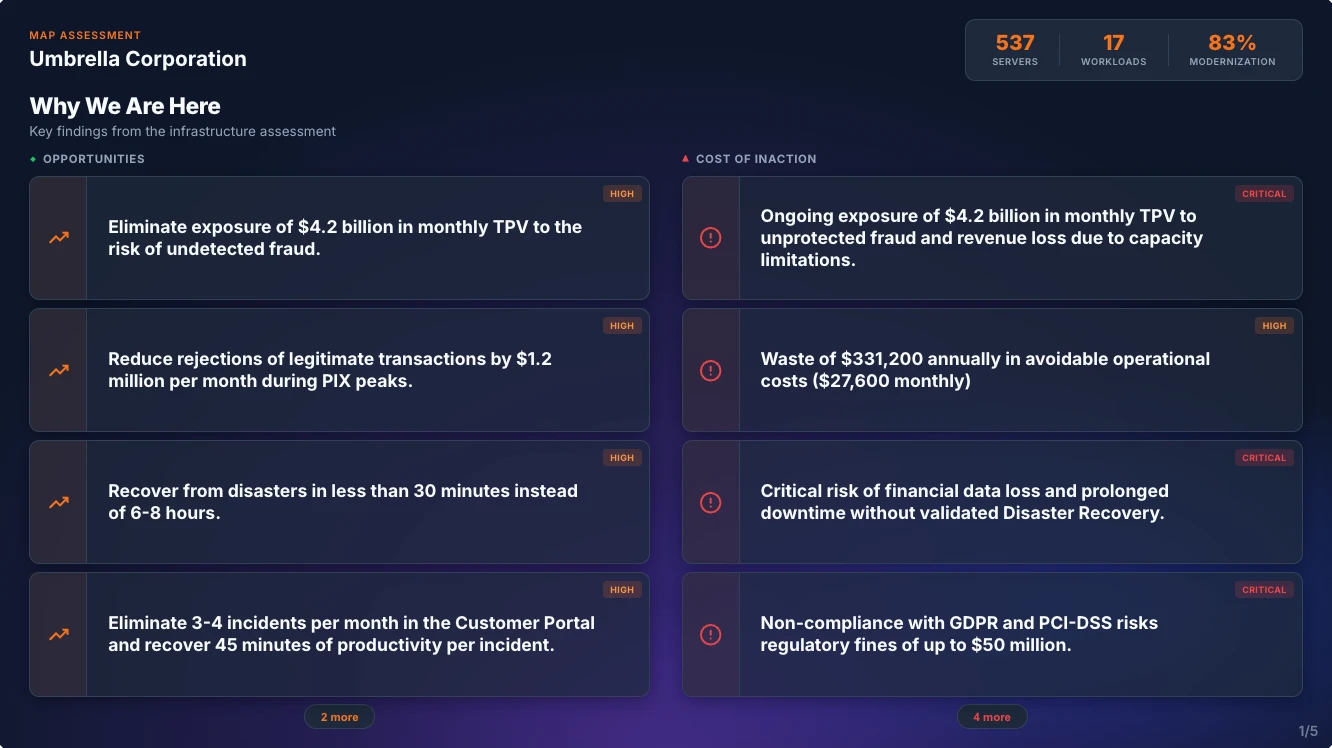
1 · Why We Are Here

What breaks if we do nothing?

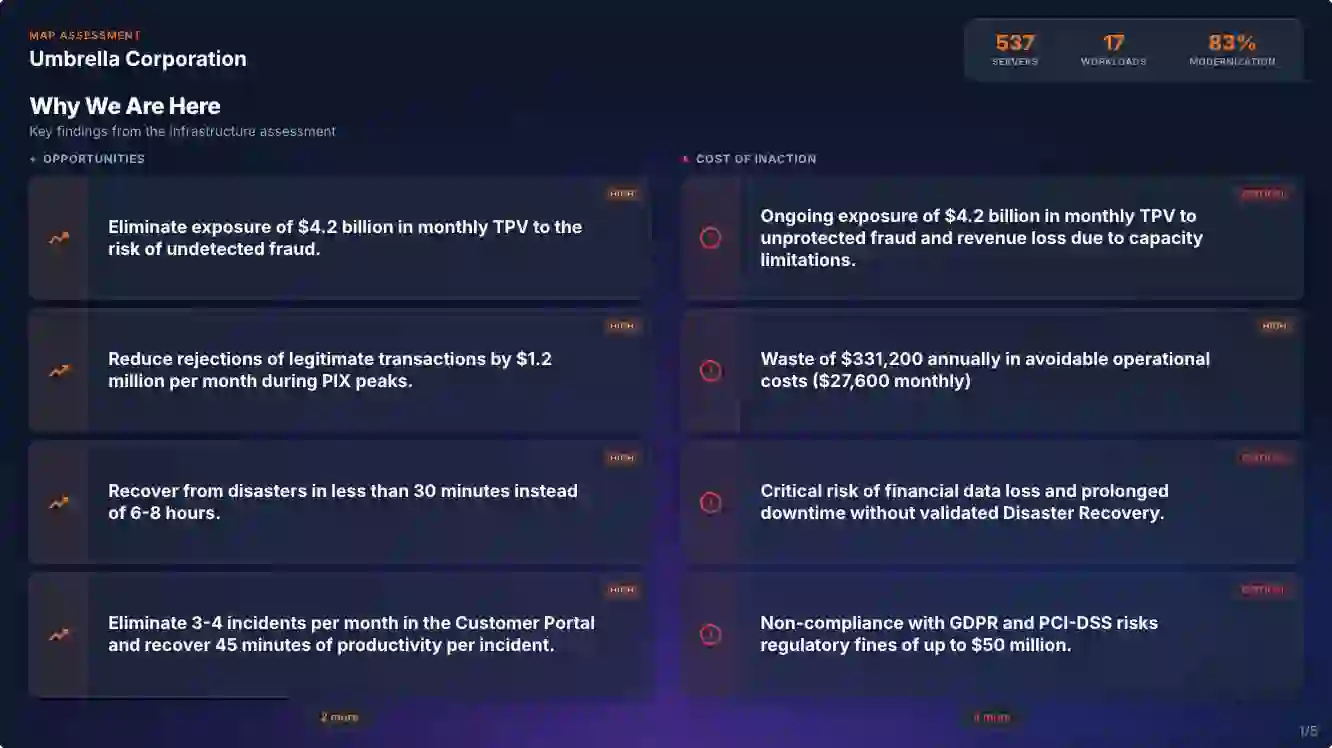
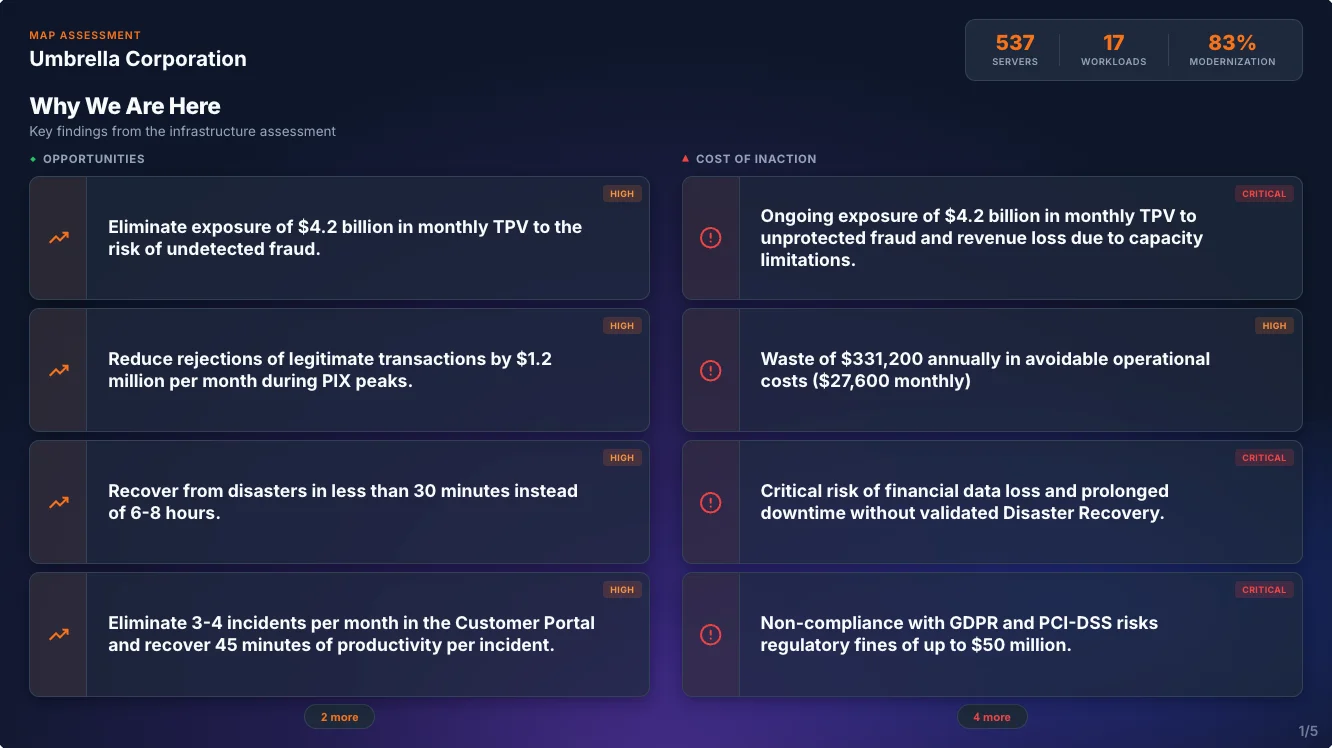
Key findings split the way an executive weighs them: opportunities on one side, cost of inaction on the other. Every item quantified and severity-tagged. Staying put stops being the safe option when it has a monthly price on it.
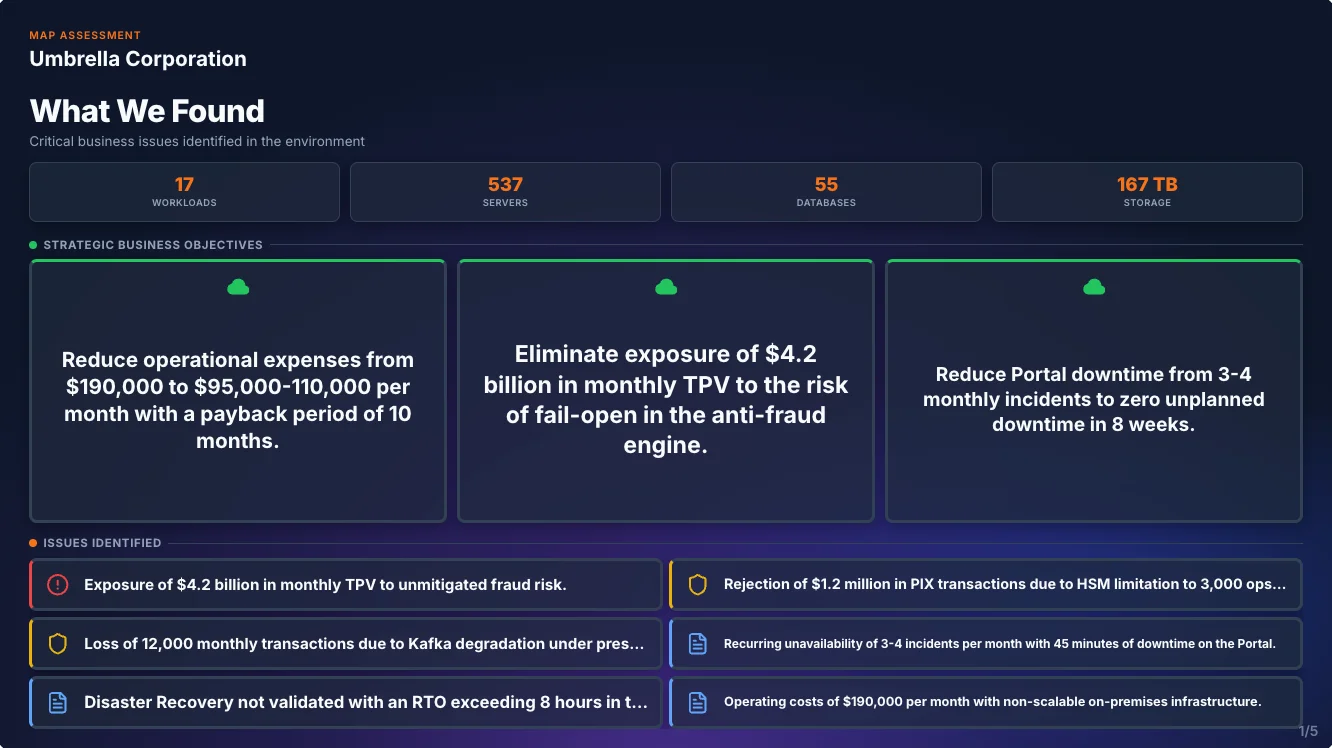
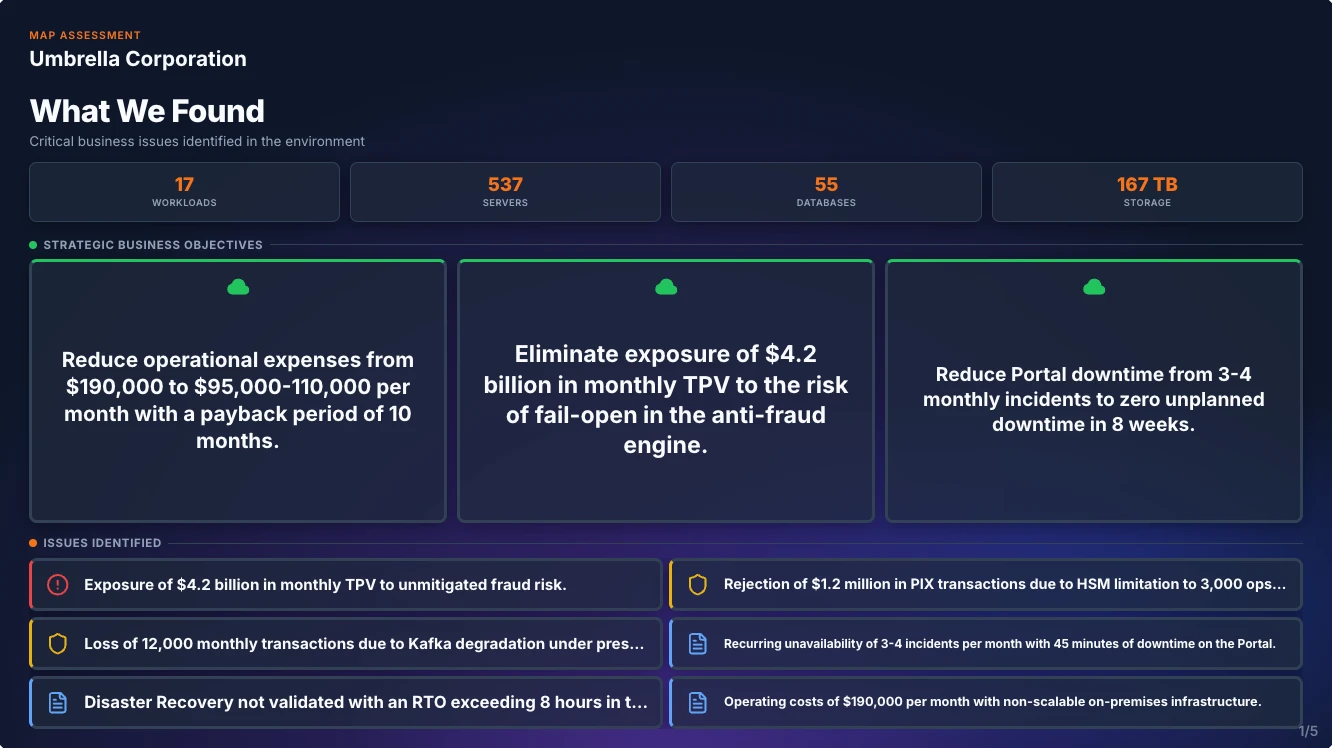
2 · What We Found

What did you actually find?

The environment in numbers — workloads, servers, databases, storage — tied to the client's strategic objectives and the issues standing in the way. The evidence behind every claim that follows, on one page instead of forty.

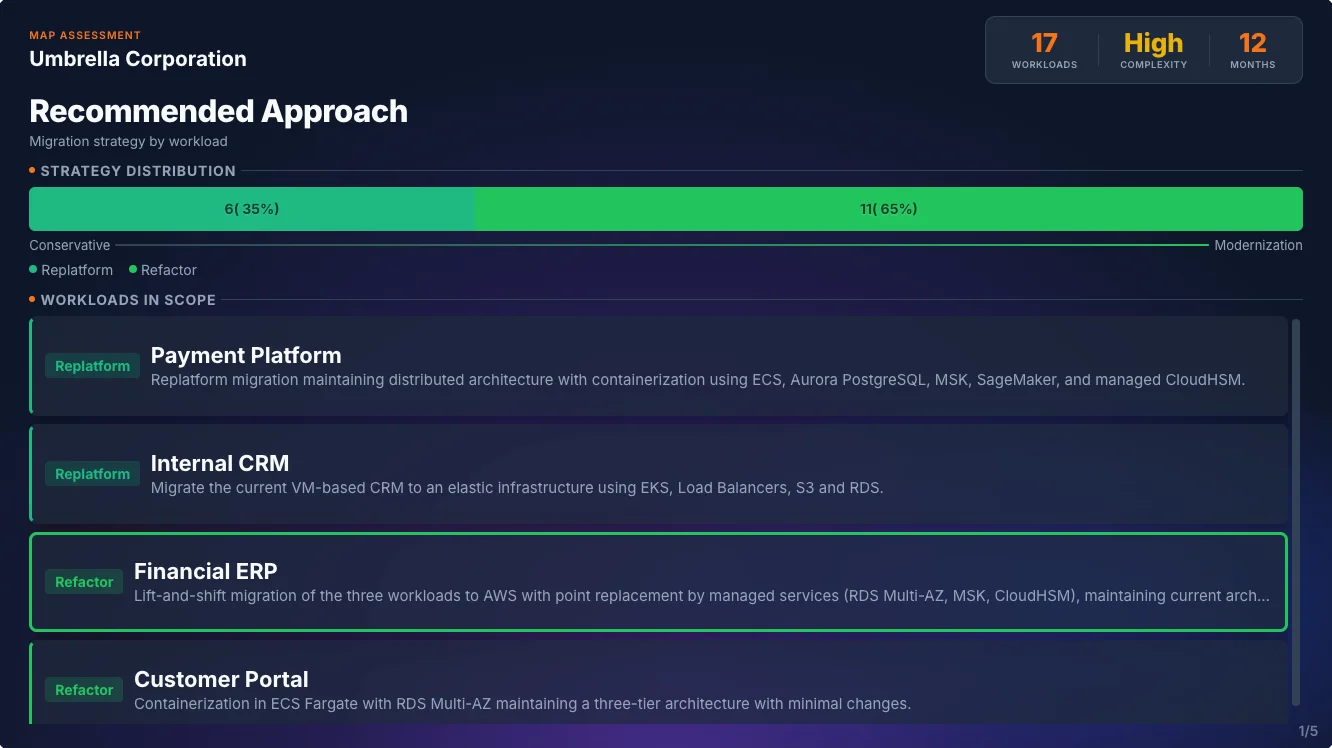
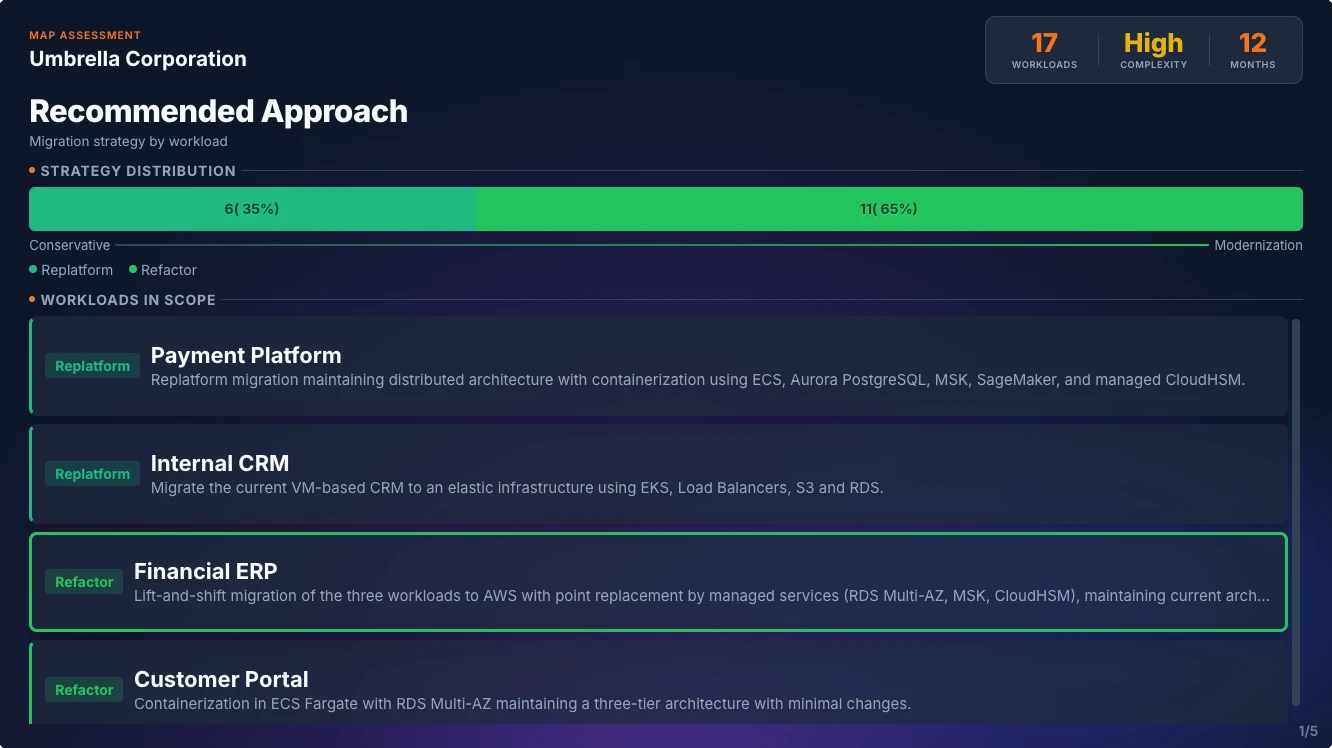
3 · Recommended Approach

Which path — and why?

The migration strategy per workload, target services named, and the portfolio's balance between conservative moves and modernization in a single bar. The technical rigor is intact — one page deep, exactly where the CTO will look for it.

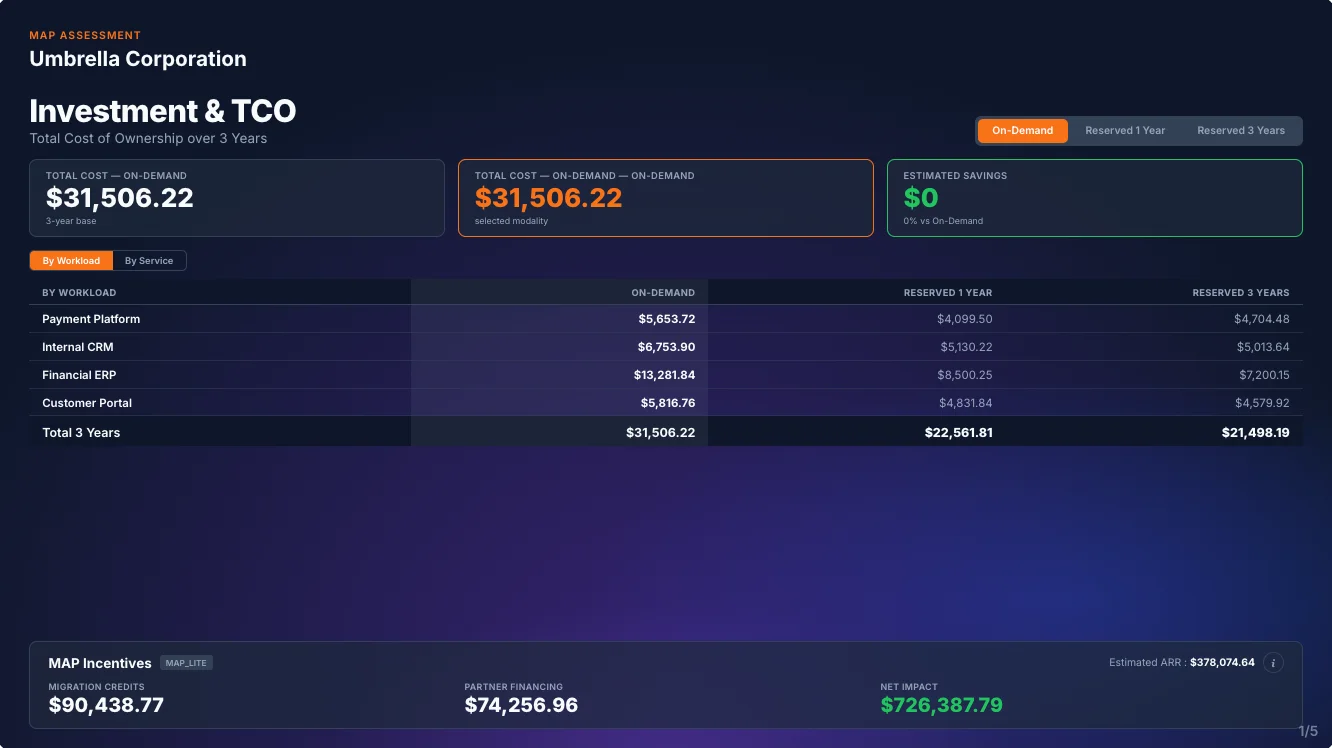
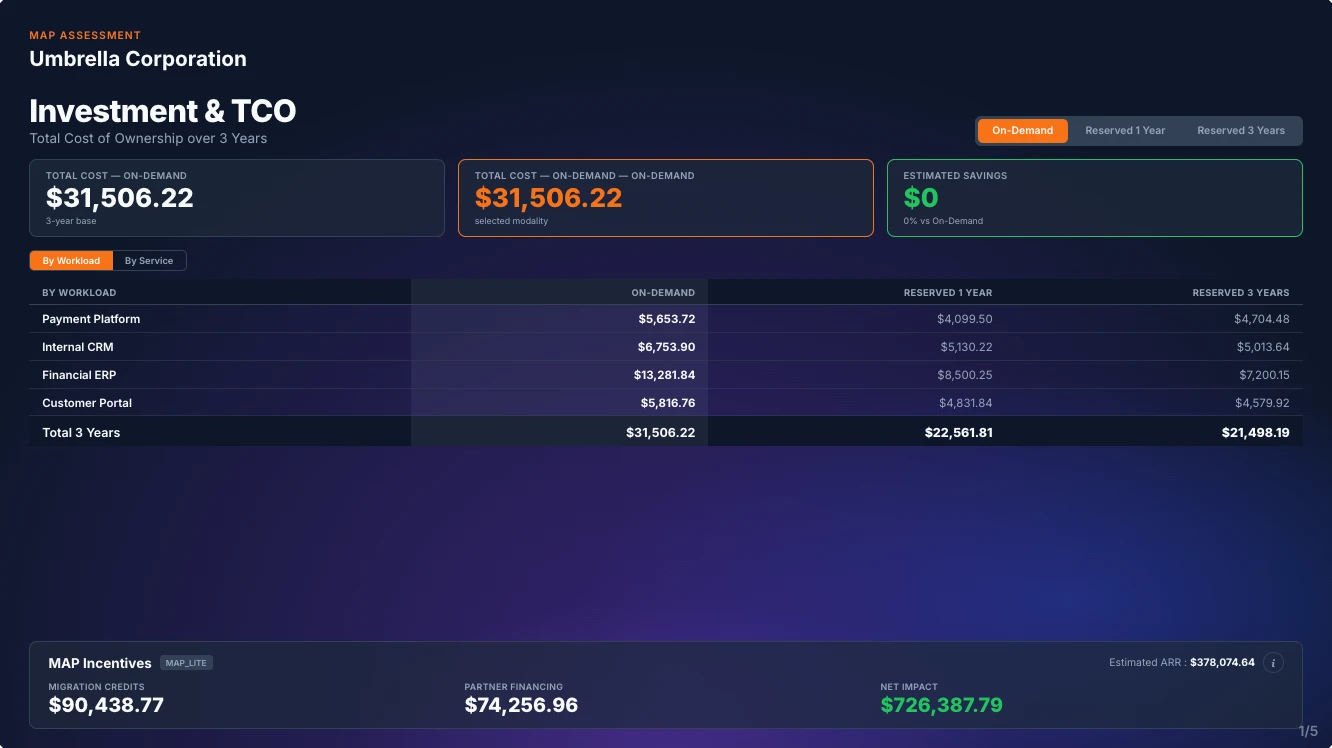
4 · Investment & TCO

What does it cost — and what comes back?

Three-year TCO by workload, on-demand against reserved pricing — and MAP incentives applied: migration credits, partner financing, net impact. Numbers the CFO can re-derive line by line.

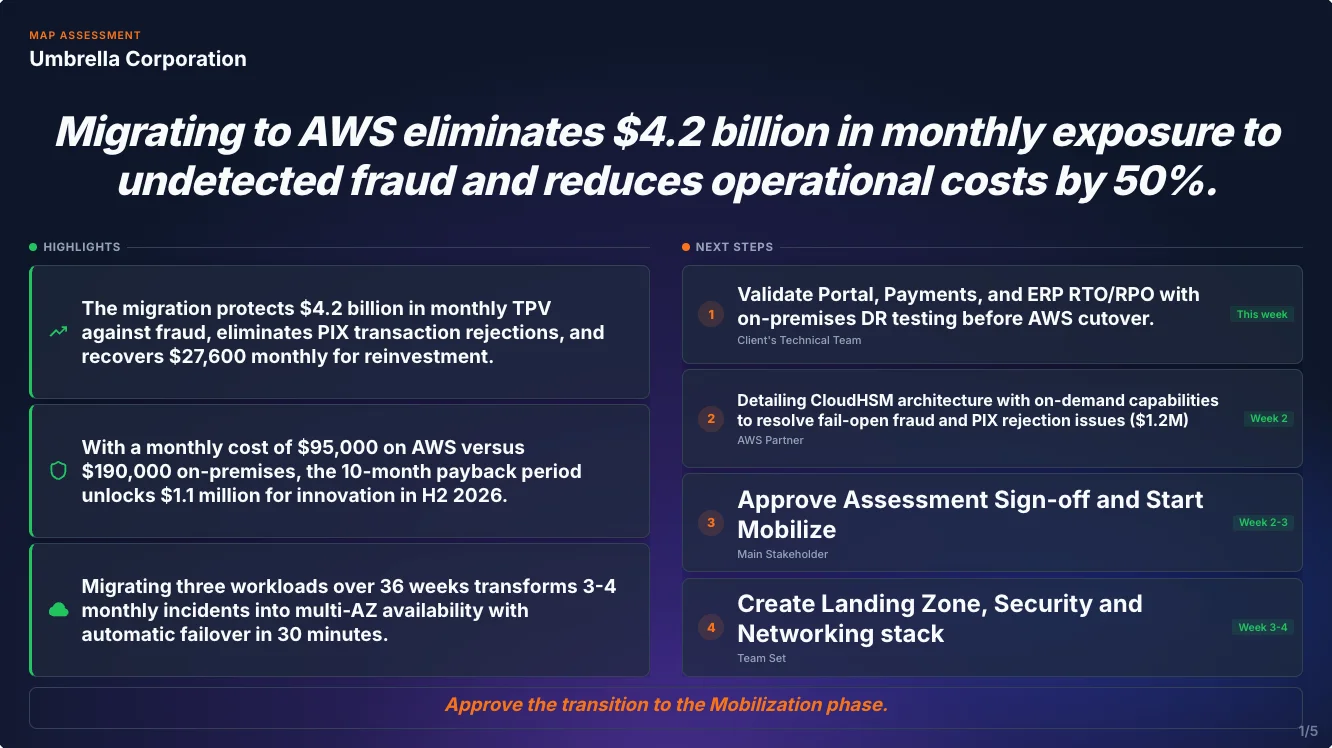
5 · The decision page

So what happens next?

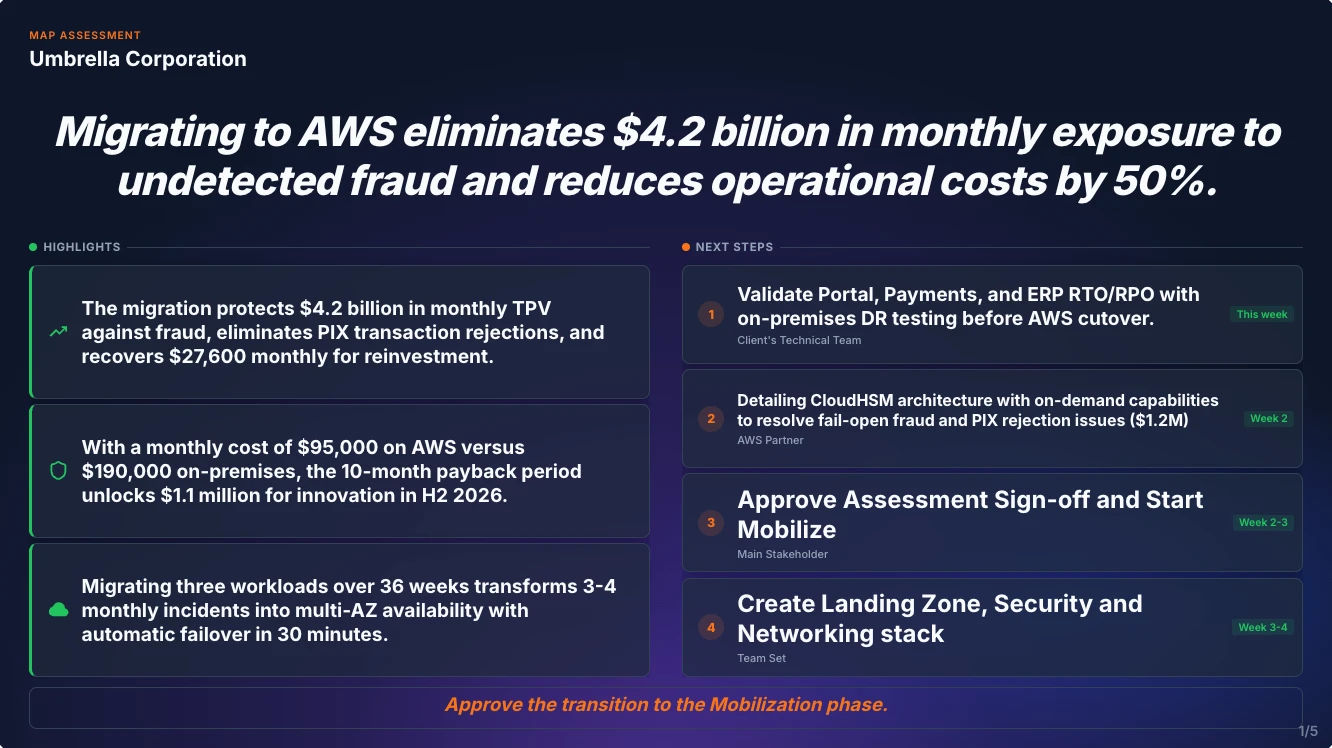
Highlights, next steps with owners and week-by-week timing, and one ask: approve the transition to Mobilize. The deck doesn't end with questions — it ends with a decision.

Sample deliverable page — Why We Are Here: key findings with severity tags
Sample deliverable page — What We Found: environment inventory tied to objectives
Sample deliverable page — Recommended Approach: migration strategy per workload
Sample deliverable page — Investment & TCO: three-year cost projection
Sample deliverable page — The Decision Page: next steps and approval ask

Sample engagement — demo data

Your methodology, your branding, your assessment.
Mapinator writes the argument.

The Deliverable

This is what goes upstairs.

Every Mapinator assessment ends in a board-ready business case — pages built to be read by the person who signs, each answering a question they're already asking.

1 · Why We Are Here

What breaks if we do nothing?

Key findings split the way an executive weighs them: opportunities on one side, cost of inaction on the other. Every item quantified and severity-tagged. Staying put stops being the safe option when it has a monthly price on it.

Sample deliverable page — Why We Are Here: key findings with severity tags

Sample engagement — demo data

2 · What We Found

What did you actually find?

The environment in numbers — workloads, servers, databases, storage — tied to the client's strategic objectives and the issues standing in the way. The evidence behind every claim that follows, on one page instead of forty.

Sample deliverable page — What We Found: environment inventory tied to objectives

Sample engagement — demo data

3 · Recommended Approach

Which path — and why?

The migration strategy per workload, target services named, and the portfolio's balance between conservative moves and modernization in a single bar. The technical rigor is intact — one page deep, exactly where the CTO will look for it.

Sample deliverable page — Recommended Approach: migration strategy per workload

Sample engagement — demo data

4 · Investment & TCO

What does it cost — and what comes back?

Three-year TCO by workload, on-demand against reserved pricing — and MAP incentives applied: migration credits, partner financing, net impact. Numbers the CFO can re-derive line by line.

Sample deliverable page — Investment & TCO: three-year cost projection

Sample engagement — demo data

5 · The decision page

So what happens next?

Highlights, next steps with owners and week-by-week timing, and one ask: approve the transition to Mobilize. The deck doesn't end with questions — it ends with a decision.

Sample deliverable page — The Decision Page: next steps and approval ask

Sample engagement — demo data

Your methodology, your branding, your assessment.
Mapinator writes the argument.

Deliverables are structured to meet the documentation standards expected by AWS partner managers during Mobilize funding reviews.

Built for the MAP program. Not adapted to it.

Assess Your engagement.
Deals stall. Mapinator fixes.
Mobilize Funded.
Migrate & Modernize

An Assess-phase engine. Mapinator works inside the engagement you're already running — the deliverable is structured as Assess-phase output, ready for what comes next.

The business case is the funding argument. The same document that convinces the client's CFO is the one that supports the Mobilize funding request — one artifact, both audiences.

MAP incentives modeled in. Migration credits and partner financing aren't a footnote — they're computed into the TCO the client sees, so the funding story is concrete from day one.

From completed Assess to Mobilize approval — without the weeks in between.

Deep integration with AWS services ensures your migration data flows directly from discovery tools into actionable executive deliverables.

Talk to us